Chip-disc filtration system
Coolant filtration simplified
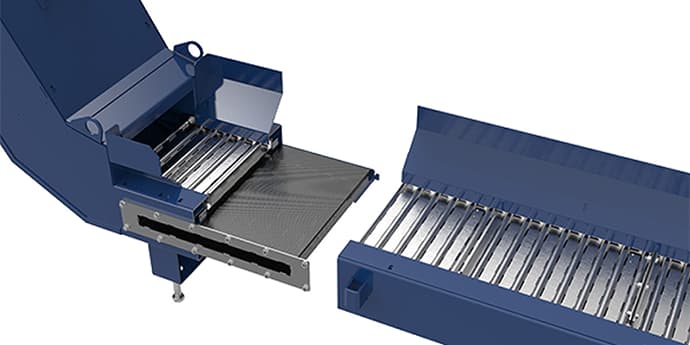
The Chip-Disc Filtration (CDF) unit combined with chip conveyors work together to form a single functioning unit, although they work completely independently of each other. The filter system takes care of separating the chips removed by the conveyor from the finest impurities. After the coolant has been cleaned, it is returned to the production process to continue use.
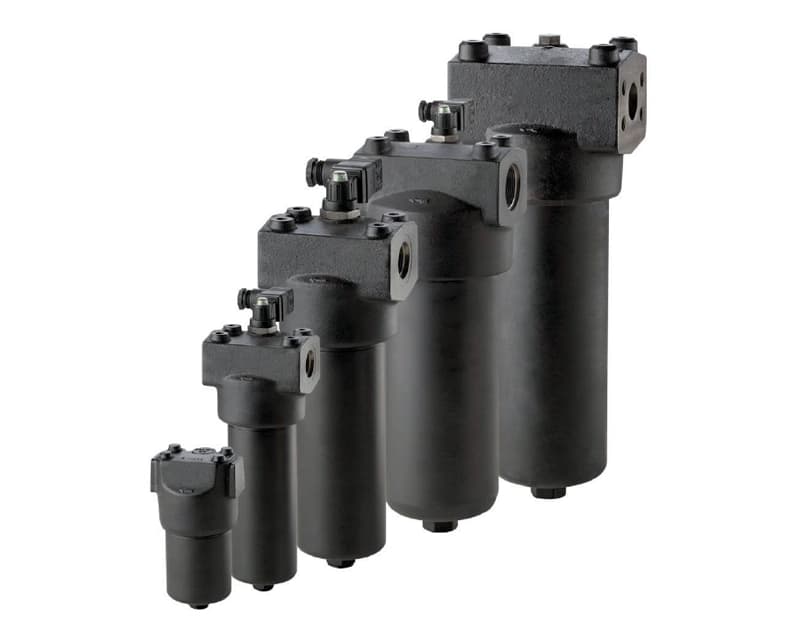
The patented protected Chip-Disc Filtration (CDF) technology achieves high levels of filtration (down to 25 microns nominal, with additional filtration down to 5-10 microns) without requiring two separate belts. Our patented disc design provides a direct CNC coolant flow path into the coolant reservoir. We offer through-spindle, high-pressure pump configurations utilizing cartridge, bag, or cyclonic filters.
This affordable, versatile approach to chip removal works with any type of material, both in water- and oil-based coolant, and with a scraper belt or hinge belt conveyor. Mounted externally for easy access, the CDF is the simplest approach to coolant filtration on the market today.
Cast iron filtration made easy
For the notoriously difficult cast iron applications, the addition of a solid rotating magnetic drum can be incorporated for efficient removal of floating chips, fines and sludge.
Not sure which filtration system you need? Contact us and our team will be happy to point you in the right direction.
Advantages
ONE BELT SYSTEM FOR ALL CHIP TYPES | Unlike many nylon mesh drum systems, CDF technology does not need two belt systems to handle stringy chips, and can be used with hinge or scraper belts.
PATENTED DISC FILTRATION DESIGN | Hennig's innovative design provides a direct coolant flow path into the coolant tank reservoir, and filters a wide variety of materials both in water- and oil-based coolants.
CONTINUOUS SELF-CLEANING OPERATION | Continuous spraying of filtered coolant against the stainless steel media removes fines and chips. no outside source such as air or steam is used.
STAINLESS STEEL MEDIA | Handles momentary or continuous heavy chip loads from 25-120 microns nominal, which can be a problem with nylon mesh, drum filters.
SAFETY | Contributes to occupational, environmental, and health safety/protection.
Features
- Main Flood Coolant Pumps
- High Pressure Pump | 300-1000 PSI (21-69 Bar)
- Backwash CDF Pump
- Disc Access Cover Panels
- Coolant Tank
- Control Box | Shown with HMI controls
- Low Inlet Height
- Additional Filtration Options | Custom coolant filtration accessories
Options
- Belt Type | Can be used with scraper belt or hinge belt
- Filter Disc Diameter | 10" (254 mm), 12" (305 mm), 16" (406 mm)
- Single or Multiple Discs | Depending on coolant flow rate
- Solid Rotating Magnetic Drum | For collecting cast iron sludge/swarf
- Cartridge or Cyclonic Filters | For filtration down to 10 microns
- Air Knife | For removing sticky chips from belt
- Sludge Pot | For easy sludge/swarf disposal
Applications
Any application requiring coolant filtration.
How the CDF system works
Step 1
COARSE CHIP REMOVAL
The hinge- or scraper-belt collects larger chips and particles for discharge into the chip hopper.
Removing coarse chips before they reach the disc filter keeps them from bundling and jamming the system, which fosters extremely efficient fine particle filtration.
Step 2
FINE PARTICLE FILTRATION
Filtering Coolant:
Small particles that escape the belt naturally migrate with the coolant flow to the rotating disc filter. There, particles down to 25 microns are collected and the cleaned coolant flows back into your tank.
Removing Particles:
The collected particles rotate with the disc filter and are lifted out of the coolant, towards the backwash spray. There, the particles are blasted onto the belt with a backwash spray and removed along with the coarse chips.
Step 3
CAST IRON MICRO-FILTRATION
Collecting and Discarding Iron Fines
If you're looking to filter cast iron fines, the addition of a solid rotating magnetic drum allows for cast iron fines to be collected and removed from the coolant.
When enough particles have collected on the magnetic drum to form a heavy sludge, the sludge drops onto the dry conveyor incline and is discarded along with the coarse chips and particles that have been collected on the disc filter into the chip hopper.
Frequently asked questions
Why does coolant need to be cleaned?
Coolant is contaminated by processing residues such as chips, dust, etc. and shortens the life of pumps and valves within coolant systems. Coolant filtration is used to remove these impurities/contamination, and improve your tool life and the quality of the parts being produced. Additional advantages include: increased machining speed, reduced downtime, and decreased production costs.
What methods are there for cleaning coolant?
Various methods are available for cleaning coolants, including cartridge filtration, bag filters, cyclonic filters, paper filtration belts, and magnetic filtration.
What is coolant and what is it used for?
Coolants can be water-based, synthetic, or oil-based. Coolant is used in industrial production with CNC machine tools. They cool and lubricate the workpiece to be machined and thus enable economical operation.
How does the coolant filter work in the cdf process?
In the CDF (Chip-Disc Filtration) process, the contaminated coolant passes through a stainless-steel medium that removes the particles and allows only the clean coolant to pass through. This can filter down to 25-30 microns of nominal filtration. The use of the above-mentioned products can filter down through spindle-type work.